Mainz – Where History, Culture, and Student Life Meet on the Banks of the Rhine
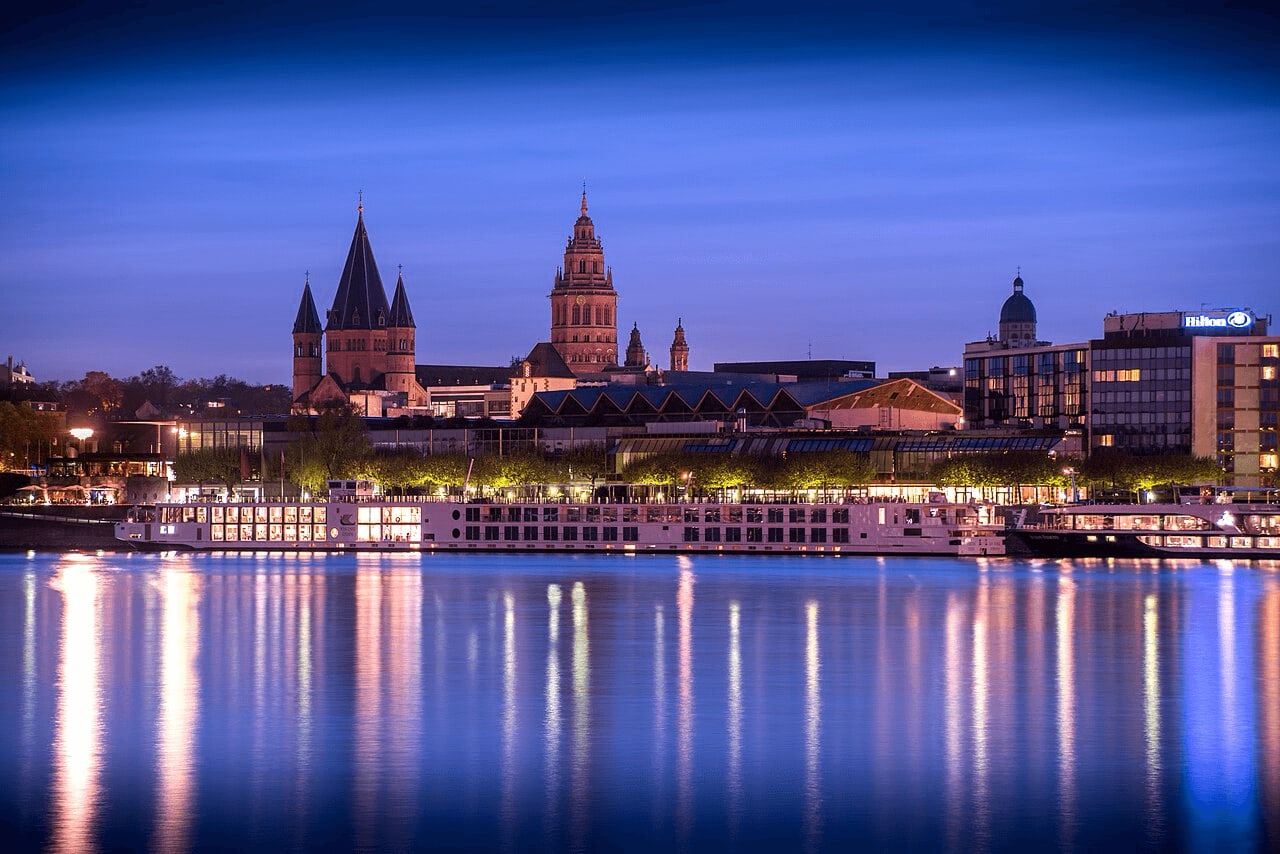
Located on the banks of the Rhine River, just west of Frankfurt, Mainz is the capital of Germany’s state of Rhineland-Palatinate (Rheinland-Pfalz). Known for its rich history, cultural wealth, student-friendly atmosphere, and green living spaces, Mainz is an ideal city for both living and studying. The city’s character is built on a balanced blend of its medieval historical heritage and modern urban life.
Mainz – Where History, Culture, and Student Life Meet on the Banks of the Rhine Hakkında
History & Culture
Mainz has a history dating back to Roman times and was an important trade and religious center throughout the Middle Ages.
The city’s most iconic landmark, Mainz Cathedral (Mainzer Dom), has a history of over 1,000 years and rises majestically in the city center.
Mainz is also the birthplace of Johannes Gutenberg, inventor of the printing press, which is why the city is home to important cultural institutions such as the Gutenberg Museum.
The Mainz Carnival (Fastnacht), held throughout the year, is one of Germany’s most famous festivals and forms the heart of the city’s social life.
Nature & Urban Life
Mainz offers a peaceful living environment with walking paths, cycling routes, and green parks along the Rhine River.
The city is culturally vibrant yet avoids the chaos of large metropolises. Its compact city center makes it easy to explore on foot or by bicycle.
Mainz is also famous for its wine culture. The surrounding vineyards, particularly in the Rheinhessen region known for Riesling, give the city a distinctive gastronomic identity.
Education & Student Life
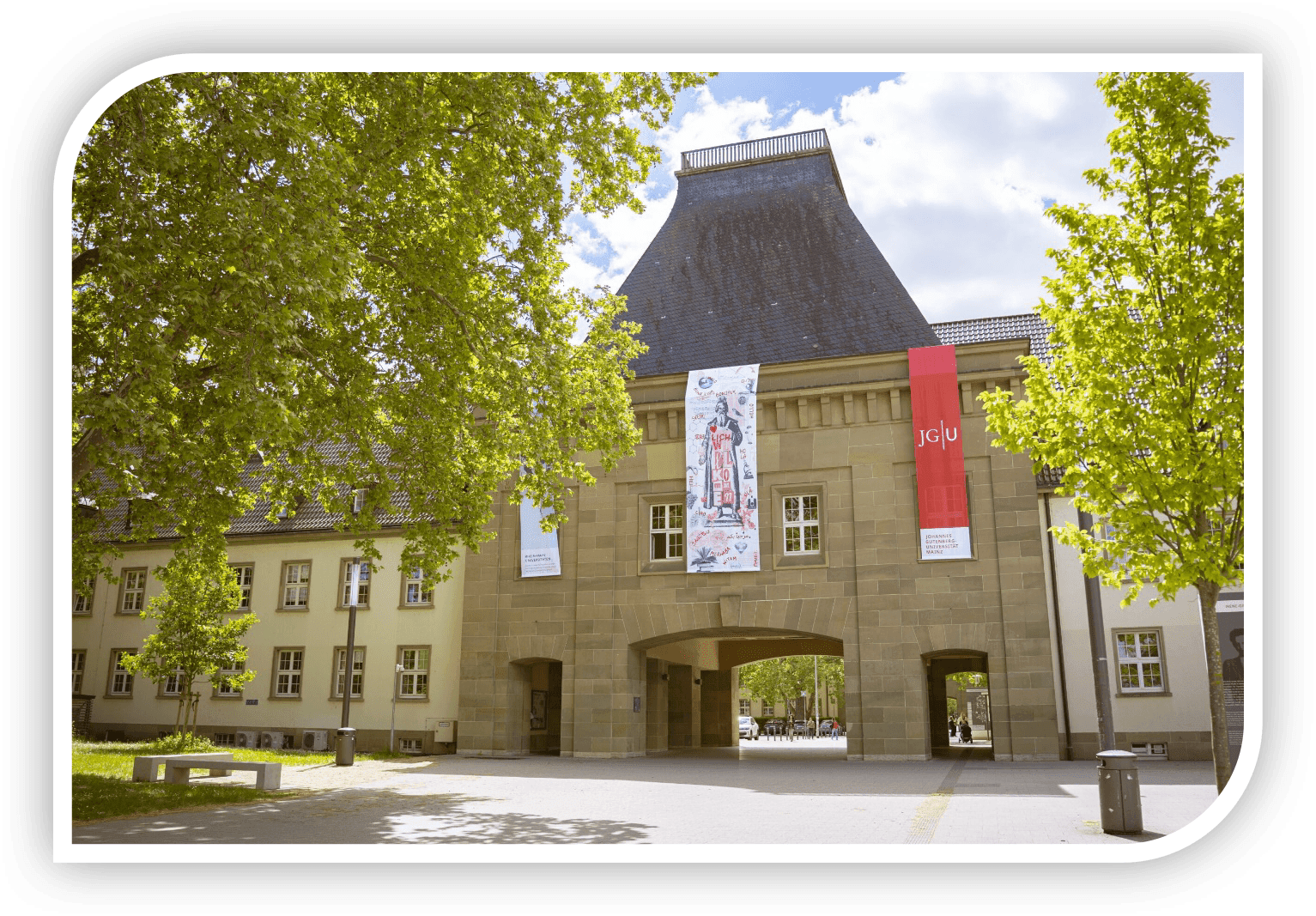
Mainz is home to Johannes Gutenberg University (JGU), one of Germany’s leading higher education institutions with a long history and diverse faculties.
A high student population keeps the social life lively, with cafés, bars, cultural events, and student clubs adding youthful energy to the city.
Transportation & Location Advantages
Proximity to Frankfurt: Mainz is only about 40 km from Frankfurt. High-speed trains reach Frankfurt city center in 30–40 minutes.
Rail Connectivity: The city is well connected to Germany’s major cities via the Deutsche Bahn network.
Air Travel: Frankfurt International Airport is approximately 25–30 minutes away by train, offering great convenience for international students.
Local Mobility: Bicycles and trams are widely used, and the city’s compact layout makes getting around easy.
Key Highlights of Mainz
Deep history dating back to Roman times
Gutenberg heritage and strong cultural identity
Wine culture and gastronomic variety
Hosting a major research university (JGU Mainz)
Peaceful yet lively riverside city life
Strategic location near Frankfurt
Johannes Gutenberg-Universität Mainz
Why Choose It?
Founded in 1477, Johannes Gutenberg University Mainz (JGU) is one of Germany’s oldest and most prestigious universities. Named after Johannes Gutenberg, inventor of the printing press, the university combines a rich educational heritage with modern research and teaching methods.
Located in Mainz, one of Germany’s cultural cities along the Rhine, JGU offers students a vibrant academic and social environment. With its large campus, numerous faculties, research centers, and lively student life, it provides a strong classical university experience—particularly for those seeking German-taught programs. Some English-taught master’s programs are also available.
Leading Faculties & Programs
Humanities & Social Sciences
Offers a strong academic tradition in philosophy, history, theology, cultural studies, and linguistics.
Mainz is especially well-known across Germany for programs in journalism, media studies, and translation studies.
Natural Sciences (Biology, Chemistry, Physics)
The physics department is particularly strong in particle and nuclear physics at the European level.
Chemistry and biology programs provide research-focused education with modern laboratory facilities.
Medical Faculty
Integrated with the university hospital and one of the most important medical centers in Rhineland-Palatinate.
Clinical education and research are conducted simultaneously.
Translation, Language & Culture (FTSK)
Located at the Germersheim campus, one of Europe’s leading translation schools.
Offers high-level education in multiple language combinations.
Economics & Law
Strong German-taught programs, with the law faculty serving as a reference point in Rhineland-Palatinate.
Key Highlights
Comprehensive Research University: Offers broad faculties in medicine, natural sciences, humanities, social sciences, and languages.
International Exchange Networks: Over 250 partner universities with strong Erasmus and global exchange agreements.
Strong Research Infrastructure: One of Germany’s leading research centers in particle physics, chemistry, and medicine.
Single-Campus Culture: Nearly all faculties are located on a single main campus, enhancing student life and interfaculty interaction.
City Advantage: Mainz provides a safe, culturally rich, and lively student-friendly environment while being only 30–40 minutes by train from Frankfurt.
What Makes the University Unique?
Johannes Gutenberg University stands out by combining the identity of a classical research university with modern scientific approaches.
Its large single-campus structure promotes interaction across faculties. The student-friendly atmosphere, safe living conditions, and rich cultural activities in Mainz provide students with a balanced academic and social experience.
JGU holds a unique position in Germany, particularly in translation studies, particle physics, and the medical faculty.
Distance from YEKTA Akademie Bruchsal Campus: approx. 140 km (around 1 hour 30 minutes by car)